


Choosing safe windows and doors from China can provide access to many designs and price points, but a polished catalogue does not prove reliable performance. Safety depends on the complete assembly: frame, glazing, locks, hinges, seals, and installation. A sturdy-looking door may still have weak hardware, while a window’s performance can vary with its glass and opening design.
Match products to the building, climate, and intended use. Ask suppliers for clear specifications, test reports, material details, and the names of the laboratories that issued them. Check whether the tested configuration matches the quoted product, including its dimensions, glass type, frame profile, and locking points. Requirements differ by destination, so confirm relevant local building and safety standards with a qualified professional before ordering. Ask for evidence.
Inspect details you can verify: corner joints, drainage openings, gasket fit, lock operation, and finish consistency. Request close-up photos, production samples, or a third-party factory inspection when practical. Confirm packaging, lead times, spare parts, warranty coverage, and how damage or defects will be handled. These details can matter as much as the unit price.
No checklist removes every risk. Supplier documents may be incomplete, and a sample may not represent later production. Allow time for document review and independent checks, especially for large orders. The right choice is not simply the cheapest product or the strongest claim. It is a clearly specified system, backed by credible evidence and installed correctly. Even then, keep asking questions. A little caution is useful.
Define safety before requesting quotations. A window or door should match the building’s location, opening size, floor level, and expected weather exposure. Specify wind-load resistance, water penetration limits, secure locks, and hardware durability. For glazed areas, ask whether glass is tempered or laminated where impact protection is needed, and request test documentation tied to the exact product configuration. Small details matter. A screen is not a fall guard.
The AAMA/WDMA/CSA 101/I.S.2/A440 standard evaluates windows and doors for structural performance, air leakage, and water penetration, with performance classes and grades. Ask suppliers for the tested class and grade, not simply a claim that a product is “strong.” CPSC guidance estimates about 3,300 children aged five and younger receive emergency treatment each year after falling from windows. That figure makes opening limits and suitable fall protection important, especially in upper-floor rooms. Check that any restrictor still allows emergency escape where required locally.
Safety also depends on installation. Confirm frame anchoring, sill support, sealant details, and compatibility with the wall opening in writing. Request reports from a qualified testing laboratory and verify that they cover the offered size, glass, hardware, and assembly. A certificate for a similar model may not prove this one performs the same. I would revisit the specification if it relies on vague words like “reinforced”; they leave too much open to interpretation.
Choosing safe windows and doors from China starts with identifying the standards used in your destination market. Chinese products may reference GB/T 8478 for building doors and windows, while GB 15763.2 covers safety glazing. These standards address material performance, glass safety, and product testing. They do not automatically prove compliance with overseas requirements.
Check the exact standard edition on every quotation and test report. Ask for air, water, and structural performance results, such as ASTM E283, ASTM E330, or ASTM E547 for many North American projects. European buyers may review EN 14351-1 and EN 12600, depending on the product and application.
Fire-rated assemblies require separate evidence. A general window certificate is not enough.
Details matter. Confirm glass thickness, impact classification, locking points, drainage holes, and fixing methods. Request reports from laboratories accredited to ISO/IEC 17025, and verify that the tested size matches your ordered size.
I have seen specifications copied between projects, even when wind loads differed greatly. That is a warning sign.
A certificate can look official yet cover only the glass, not the complete assembly. Compare the Chinese GB requirements with local building codes, climate conditions, and installation rules.
When documents conflict, consult an independent engineer or certification professional. Safe selection is less about a familiar label and more about traceable evidence.
When sourcing windows and doors from China, assess the manufacturer’s quality system, not just its showroom or website. Ask who checks incoming glass, profiles, hardware, and sealants. A capable team can explain inspection steps and show dated records. A neat factory tour is not proof. Follow one order from material labels to finished-product packing, and see whether batch details stay traceable.
Request test reports for the exact frame, glass, hardware, and opening configuration you plan to buy. A report for a similar product may not answer your questions. Check the test date, sample description, and issuing laboratory. Ask how the factory handles failed inspections. Look for documented corrective actions, not only verbal assurances. Small details matter: corner joints, drainage slots, gasket fit, and scratches after protective film is removed.
If possible, inspect a production sample and compare it with approved drawings and specifications. Watch workers fit locks and operate each sash; uneven movement can reveal poor adjustment. Ask how often measurements are checked and who signs off before packing. Video calls help, but they cannot replace independent inspection. I would also ask for a recent quality record, though some records may be incomplete or difficult to compare. That uncertainty deserves follow-up, not a guess.
Safe windows and doors from China require more than attractive photos or a low quotation. Verify the frame material, reinforcement, seals, and finish before approval. The U.S. Department of Energy reports that windows can account for 25–30% of residential heating and cooling energy use. Therefore, request thermal data for the complete unit, not only the glass. Check the profile thickness, steel reinforcement, drainage paths, gasket quality, and corrosion protection. Small omissions can become expensive later.
Glazing deserves equal attention. Ask whether the unit uses tempered or laminated safety glass, and confirm the glass thickness, spacer type, and gas filling. For performance evidence, look for laboratory reports covering air leakage, water penetration, and structural pressure. Common references include ASTM E283, ASTM E331, and ASTM E330. NFRC technical procedures can support U-factor and solar heat gain claims. A report can still be stale, incomplete, or issued for a different configuration. Match every report to the exact profile, glass package, dimensions, and hardware. That step is often missed.
Tips: Request serial-numbered samples, section drawings, and full test conditions. Inspect locks, hinges, rollers, and multipoint mechanisms for smooth operation. Ask for corrosion testing where coastal exposure is expected. Compare reported values with site requirements, not marketing language. Keep one approved sample for production checks. It feels basic, but it prevents confusion. Third-party verification remains valuable, although it adds time and cost.
| Verification Area | What to Specify | Evidence to Request | How to Check | Warning Signs |
|---|---|---|---|---|
| Product identity and configuration | Define the frame material, opening style, dimensions, number of panels, glazing build-up, hardware, finish, and intended installation conditions. | Signed quotation or specification, approved drawings, bill of materials, and a schedule identifying each window and door type. | Confirm that drawings, quoted products, samples, and test reports describe the same configuration. Record any permitted substitutions in writing. | Reports or quotations use vague descriptions such as “standard window” without identifying sizes, opening types, or glazing. |
| Frame and sash materials | For aluminum, specify the alloy and temper where relevant, profile dimensions, thermal-break details, and coating requirements. For uPVC, define the profile system, reinforcement, and finish. | Material declarations, profile drawings, coating or finish details, and production records linked to the order. | Compare delivered profiles and reinforcement with approved drawings. Check that declared materials and finishes match the project specification. | Material descriptions lack measurable details, or the supplier will not confirm that production matches the approved sample and drawings. |
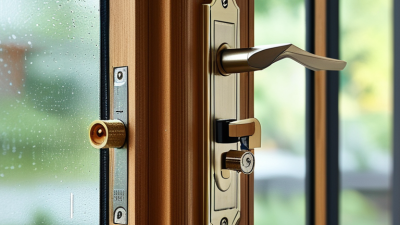
| Hardware and security | Specify hinges, locks, handles, multipoint locking, restrictors, and corrosion-resistance requirements appropriate to the location and use. | Hardware schedule, component specifications, installation details, and relevant test or corrosion-resistance documentation if required by the project. | Check that each opening type has compatible hardware and that the installed parts match the approved schedule. Test operation and locking on sample units. | Critical hardware is described only as “standard,” or components are changed without approval or evidence of compatibility. |
| Safety glazing | Identify where safety glazing is required by applicable local building codes, such as certain doors and hazardous locations. Specify the required glass type and marking. | Glass build-up schedule, safety-glazing certification or test documentation, and details of permanent product markings where applicable. | Verify that the glass type and thickness match the approved schedule. Check markings and documentation against the requirements for the destination market. | Safety glass is claimed without supporting documentation, or glass in a specified safety location is substituted without approval. |
| Insulating glass units | Specify pane types and thicknesses, cavity width, gas fill if required, spacer, and any low-emissivity coating or laminated-glass requirement. | Insulating-glass unit (IGU) specification, production identification, and applicable durability or conformity documents. | Compare the delivered IGU build-up with the project schedule. For European projects, check whether the declared product standard and documentation are applicable to the product. | Only a general “double glazing” description is provided, with no pane, cavity, spacer, or coating details. |
| Air leakage, water penetration, and structural performance | Set project-specific performance requirements based on building height, exposure, climate, and applicable codes. Do not assume one rating suits every project. | Full test reports for the relevant product type and configuration. Depending on the market, reports may reference ASTM E283, ASTM E331, ASTM E330, or applicable EN methods. | Check the tested specimen, dimensions, opening style, glazing, test pressures, results, and laboratory details. Confirm that the proposed product is within the report’s stated scope. | A certificate or summary gives no test method, specimen details, measured results, or traceable report number. |
| Thermal performance | Set the required whole-window or whole-door U-factor and solar heat gain or equivalent climate-specific metric for the destination market. | Product-specific thermal calculation or test report, with the method, specimen configuration, and rating basis identified. | Ensure the stated value applies to the complete product, not just the center-of-glass. Confirm that frame, glazing, spacer, and size assumptions match the order. | Glass-only figures are presented as whole-window performance, or ratings are quoted without a method or configuration. |
| Report authenticity and scope | Require documentation from a competent laboratory and specify applicable standards and acceptance criteria in the purchase contract. | Complete, unaltered reports with report numbers, issue dates, laboratory identity, test methods, results, and specimen descriptions. | Contact the laboratory using independently verified contact details. Where accreditation is claimed, check the accreditation body’s directory and confirm the relevant test is within scope. | Edited screenshots, missing report pages, unverifiable report numbers, or a report for a different product or manufacturer configuration. |
| Production quality and shipment inspection | Agree inspection stages, acceptance criteria, packaging requirements, and a process for documenting nonconformities before production begins. | Approved pre-production sample, inspection checklist, production photos, final inspection record, and packing list. | Inspect representative units for dimensions, finish, glass identification, hardware operation, seals, drainage paths, and damage before shipment. | No written acceptance criteria, no traceable inspection records, or products are packed before agreed checks are completed. |
| Installation and warranty | Confirm installation details, compatible sealants and fixings, drainage provisions, maintenance needs, and warranty terms for the destination climate. | Installation manual, maintenance instructions, written warranty, and clearly stated exclusions and claim procedure. | Check that the installation method suits the building design and local practice. Confirm who is responsible for installation, adjustment, and after-sales support. | Warranty terms are unclear, installation instructions are unavailable, or responsibility for defects is not defined. |
A reliable purchase starts before the shipment leaves the factory. Arrange an independent pre-shipment inspection when production is complete, not only after packing. Check frame dimensions, glass type, safety markings, locks, hinges, handles, and drainage holes. Inspect several units from different cartons. One perfect sample proves little. Ask the inspector to record measurements, photos, and operating tests. Small gaps, scratched glass, or weak corner joints may become expensive problems after arrival. Confirm that the products match approved drawings, specifications, and local project requirements.
Tips: Use a clear inspection checklist. Test sliding panels repeatedly. Check protective film, corner protection, and carton labels. Measure diagonal dimensions to identify poor squareness. Request close-up photos of seals and hardware. A factory video is useful, but it is not independent evidence.
Professional installation matters just as much. The installer should verify that each opening is plumb, level, and square before fitting the unit. Use suitable shims and anchors, without forcing the frame into place. Sealant, flashing, and drainage paths must follow the installation method. After installation, test every sash, lock, screen, and door several times. Look for friction, air gaps, water paths, or movement around the frame. Installation errors are easy to blame on the product, yet the real cause can be rushed preparation. Even experienced teams should document adjustments and inspect the first completed opening carefully.